


 Study in Australia
What Australia's student visa rule changes mean for Indians
Since 2 Oct, most temporary visa holders in Australia can't apply for a student visa from inside the country, and transfers between colleges face new limits.

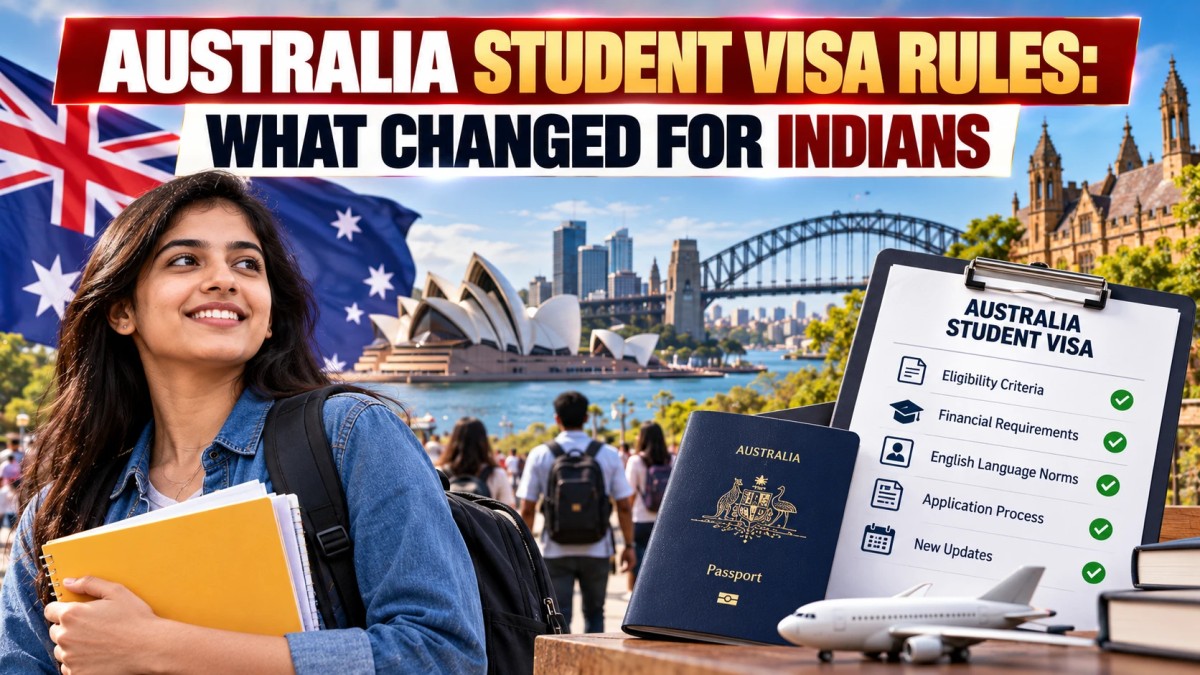
Australia has tightened its student visa rules. Since 2 October 2026, most people holding other temporary visas, such as working holiday or skilled worker visas, can no longer apply for a student visa from inside Australia, a practice the government calls "visa hopping". New international students also have to stay longer with their first college before transferring.
India is one of Australia's two biggest sources of international students, so the changes matter to tens of thousands of Indian families planning study there.
Key points
- Most temporary visa holders, including Working Holiday Maker and Skills in Demand visa holders, must now apply for a student visa from outside Australia.
- Exceptions include some PhD and school students, government-sponsored students, and students who need more time to finish a current course.
- Non-school students generally must complete 12 months of their main course, up from six, before transferring to another provider; this applies until 30 June 2027.
- Moving onshore from higher education into vocational training (VET) is being restricted, with a new transfer stream from 1 July 2027.
- Australia had about 107,000 Indian student visa holders as of 30 June 2025, according to Business Today.
What has changed
No more onshore switching for most visa holders. People in Australia on most temporary visas can no longer apply for a student visa without leaving the country, Business Today reported. Some groups are exempt, including certain PhD and school students, government-sponsored students and those who need extra time to finish their current course.
Longer before changing college. Non-school international students now generally have to complete 12 months of their principal course, rather than six, before transferring to another registered provider. The rule applies until 30 June 2027.
Harder to switch to vocational courses. Students can no longer arrive for a university degree and then transfer onshore into vocational education and training (VET). From 1 July 2027, a new transfer stream will apply, and students will generally need a new visa before starting with a new provider.
The government says the reforms are meant to protect the integrity and reputation of Australian education, not to shut out genuine students, Business Today reported. Changes to rules for students' dependants have also been announced separately.
Some sources give 17 September as the start date for part of the package; most give 2 October. Check the Department of Home Affairs website for the exact dates that apply to you.
Australia student visa rules 2026: what it means for Indian students
India was Australia's second-largest source of international students in 2024-25. As of 30 June 2025, there were 107,038 Indian student visa holders in Australia, slightly ahead of the 102,990 from China, Business Today reported, and Indians made up 16% of the 687,810 international students in the year to June 2026.
What Indian students should do now
For new students, the practical message is to choose the course and college carefully before leaving India, because changing your mind after arrival is now harder and slower. For people already in Australia on other visas, the student visa is no longer an easy way to extend a stay.
Business Standard noted that the changes are expected to hit demand for coursework master's programmes from India more than research degrees.
Why it matters: Australia, the UK, Canada and the US have all tightened rules for international students in the past two years, narrowing the options for Indian families who spend large sums on education abroad. For Australian universities, which depend heavily on fees from Indian and Chinese students, the reforms are part of a delicate balance between managing migration numbers and protecting a major export industry.
Australia's message is clear: choose once, choose well. For Indian students, the expensive mistake is no longer picking the wrong country; it's picking the wrong course and assuming you can fix it later.
Frequently asked questions
What's Your Reaction?
 Like
0
 Dislike
0
 Love
0
 Funny
0
 Wow
0
 Sad
0
 Angry
0




Comments (0)