


India tells Pakistan at UN it can't lecture on minorities
India told Pakistan at the UN it has no standing to lecture on minorities, and recalled Pakistan refusing its soldiers' bodies after Kargil.

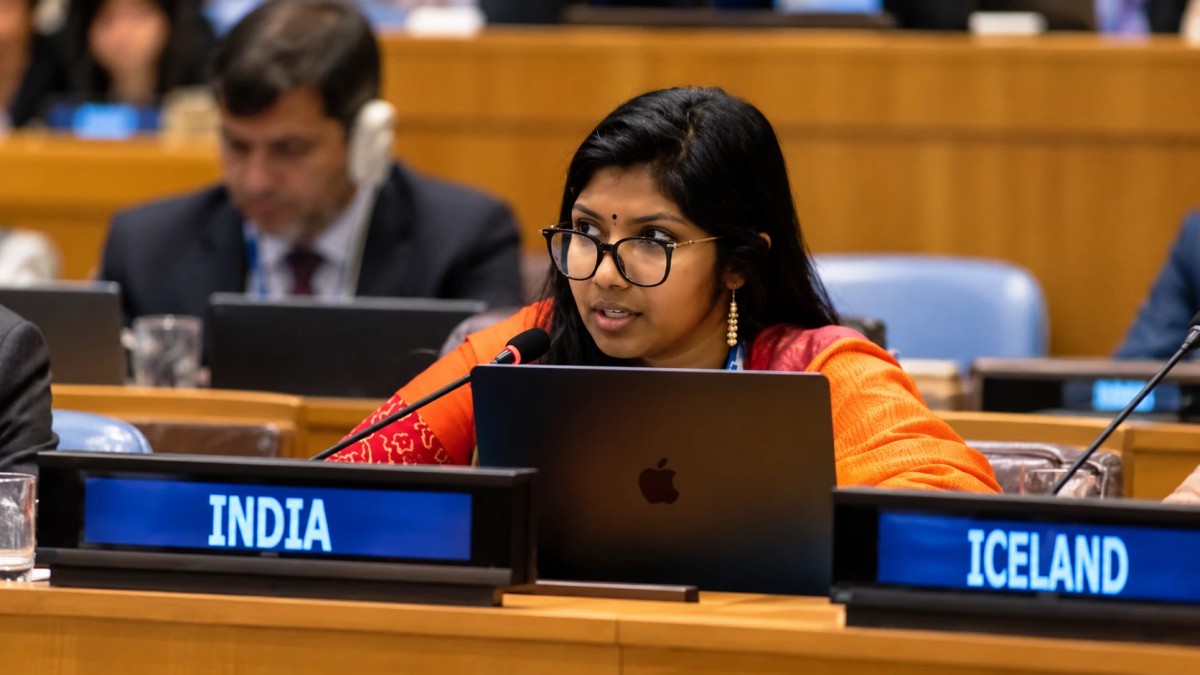
India has hit back at Pakistan at the United Nations, saying that a country that cannot keep its own minorities safe has no right to lecture New Delhi. "A state that cannot ensure the safety of its own minorities has no standing to lecture India," said Bhavika Mangalanandan, First Secretary at India's Permanent Mission to the UN, The Tribune and ANI reported.
She spoke on 22 October during an interactive dialogue with the UN Special Rapporteur on Freedom of Religion or Belief, whose report dealt with funeral rights in exceptional circumstances. In her remarks, she also recalled that Pakistan had refused to take back the bodies of its own soldiers killed in the 1999 Kargil conflict.
Key points
- India's diplomat Bhavika Mangalanandan said Pakistan has "no standing to lecture India" on minorities.
- She said Pakistan's minority population is shrinking and their rights are abused.
- On burial rights, she said it was "deeply ironic" for Pakistan to speak, since it did not accept the bodies of its own soldiers killed in Kargil.
- She said the Indian Army buried Pakistani soldiers with military honours and Islamic rites.
- India also questioned parts of the Special Rapporteur's report, including on COVID-19 and on funerals of terrorists.
What India said
According to The Tribune and ANI, Mangalanandan made five main points.
1. On Pakistan's minorities. She said Pakistan's minority population is shrinking and that their rights are abused, and that legal safeguards on paper make little difference because they are poorly enforced. "A state that cannot ensure the safety of its own minorities has no standing to lecture India," she said.
2. On Kargil. Responding to Pakistan raising burial rights, she said it was "deeply ironic" because Pakistan "did not even accept the bodies of its own soldiers" killed in Kargil in 1999. She said "it was the Indian Army that buried a number of Pakistani soldiers with military honours and in accordance with Islamic rites".
3. On Jammu and Kashmir. She urged Pakistan to focus on the areas of Jammu and Kashmir "under its illegal occupation, such as Rawalakot", The Tribune reported.
4. On the COVID-19 section of the report. India questioned the report's suggestion that discrimination in funerals during the pandemic happened mainly in the Global South. "What benefit does a report derive by not mentioning similar tragic situations in the developed world?" she asked.
5. On terrorists' funerals. She argued that the rights of terrorists should not overshadow those of their victims, and said terrorists "damage the psyche of a nation". She also warned against "deriving political mileage out of people's pain and loss".
The forum
| Detail | What it was |
|---|---|
| Speaker | Bhavika Mangalanandan, First Secretary, Permanent Mission of India to the UN |
| Date | 22 October 2026 |
| Forum | Interactive dialogue with the UN Special Rapporteur on Freedom of Religion or Belief, in New York |
| Topic of the report | Funeral rights in exceptional circumstances |
| India's response | Rebuttal of Pakistan and criticism of parts of the report |
Special Rapporteurs are independent experts appointed by the UN Human Rights Council. Their reports are presented to member countries, who can respond in dialogues like this one. Countries often use these sessions to answer each other directly.
What is the Special Rapporteur on Freedom of Religion or Belief?
The post was created in 1986 by the old UN Commission on Human Rights, first under the title of Special Rapporteur on religious intolerance, and was renamed in 2000. The rapporteur is an independent expert, not a UN staff member, who reports each year to the Human Rights Council in Geneva and to the UN General Assembly in New York. The reports look at how countries protect the right to hold, change and practise a religion or belief, and the rapporteur can visit countries that agree to an invitation.
This year's report focused on funeral rights in exceptional circumstances, such as pandemics, conflicts and terrorism cases, which is why burial rights, COVID-19 and the funerals of terrorists came up in the dialogue.
Kargil in brief
The Kargil conflict was fought between May and July 1999, after Pakistani soldiers and militants occupied heights on the Indian side of the Line of Control in the Kargil sector of what is now Ladakh. India's armed forces drove them back in Operation Vijay. India lost 527 soldiers, according to official figures, and marks 26 July every year as Kargil Vijay Diwas.
Pakistan at first denied that its regular army was involved, describing the intruders as militants. India has long said this was why Pakistan did not claim the bodies of many of its soldiers, and the Indian Army buried them with religious rites. That history is what Mangalanandan referred to at the UN.
A familiar exchange
India and Pakistan regularly trade sharp words at UN forums. Pakistan often raises Kashmir and the treatment of Muslims in India, and India responds by pointing to Pakistan's record on minorities and on terrorism. In February 2026, at the UN Human Rights Council in Geneva, India used its right of reply to reject allegations from Pakistan, All India Radio reported.
Bhavika Mangalanandan has delivered several of India's replies at the UN in recent years, including at the UN General Assembly.
Minorities in Pakistan: what is reported
India's criticism draws on concerns raised by human rights groups and by the UN itself. UN human rights experts have repeatedly warned about forced conversions and forced marriages of girls from minority communities in Pakistan, especially Hindu and Christian girls in Sindh province. The Tribune also cited a recent interfaith event in Hyderabad, Sindh, where speakers raised concerns about abductions and forced conversions of Hindu girls.
Pakistan's Hindu, Christian, Sikh and Ahmadi communities have also faced attacks on places of worship and the use of blasphemy laws against members of minority groups, according to human rights organisations.
Pakistan's response
At the time of writing, we had not seen a public response from Pakistan's government or its UN mission to India's remarks. We will update this story if Pakistan responds.
Why it matters
- For India's diplomacy: India has made it a point not to let Pakistan's statements at the UN go unanswered, and to turn the focus back to terrorism and Pakistan's own human rights record.
- For the Kargil memory: The reference to Kargil, where India buried Pakistani soldiers whose bodies Pakistan did not claim, is one India has used before to question Pakistan's claims on humanitarian issues.
- For the UN system: India's criticism of the report itself, saying it focused on the Global South while ignoring the developed world, reflects a wider argument from developing countries that UN human rights reports apply standards unevenly.
The exchange was short, but the message from New Delhi was clear: India will answer Pakistan at every UN forum, and it will keep pointing to Pakistan's own record.
Frequently asked questions
What's Your Reaction?
 Like
0
 Dislike
0
 Love
0
 Funny
0
 Wow
0
 Sad
0
 Angry
0


Comments (0)