


 Law & Courts
Saurav Das, Ashutosh Ranka released after Delhi HC plea
CJP leaders Saurav Das and Ashutosh Ranka were ordered released on 21 October after withdrawing their Delhi High Court plea. What the courts said and why.

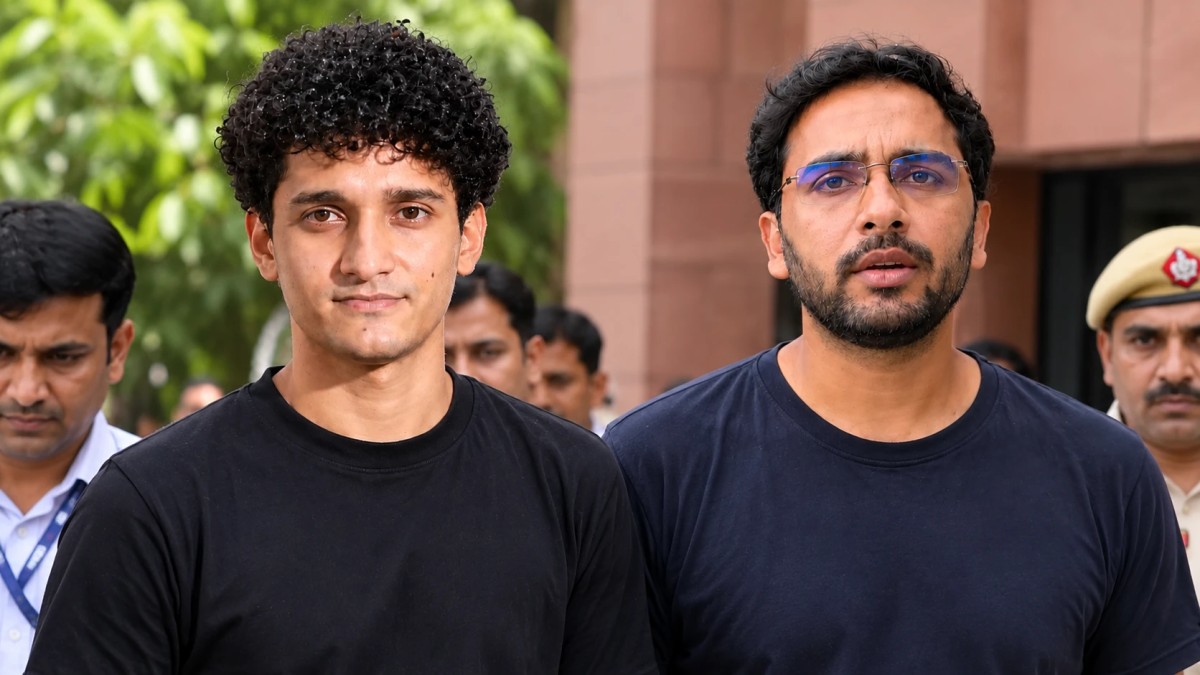
Update, 21 Oct 2026, 8 PM (IST): The Special Executive Magistrate on Wednesday ordered the release of Saurav Das and Ashutosh Ranka from judicial custody, after the two withdrew their petition in the Delhi High Court earlier in the day, Daily Jagran, India.com and Gujarat Samachar reported. Details are in the new section below.
Two leaders of the Cockroach Janta Party (CJP), Saurav Das and Ashutosh Ranka, have asked the Delhi High Court to end their judicial custody, a day after a Special Executive Magistrate extended it by two more days and rejected the sureties offered for their release.
The two were taken into custody after they allegedly entered Jantar Mantar, which is no longer a designated protest site, by climbing over its locked gates. They have now spent six days in custody, in proceedings under the preventive provisions of the criminal procedure law, and neither has been convicted of anything. Their petition, filed on Tuesday, 20 October, says the custody violates their right to personal liberty.
Key points
- Who: CJP leaders Saurav Das and Ashutosh Ranka, held in connection with entering Jantar Mantar.
- 14 October: a Special Executive Magistrate (SEM) sent them to five days of judicial custody.
- 19 October: the SEM extended custody by two days, to 21 October, and rejected their sureties.
- 20 October: they moved the Delhi High Court and sought an urgent hearing, as the court is on its Dussehra break.
- Their case: they offered sureties repeatedly and should have been released, and the order did not follow the BNSS rules.
- Earlier, on 11 October, the two had been released on a ₹50,000 bond to keep the peace for a year after a detention on 10 October.
- Update, 21 October: the two withdrew their High Court petition after the court asked them to await the magistrate's decision; the magistrate then ordered their release.
What happened at Jantar Mantar
Jantar Mantar, the road beside the 18th-century observatory near Parliament, was for decades Delhi's best-known protest venue. On 12 October 2026, the Union government dropped it from Delhi's list of designated protest sites, as we reported in our story on the SIR protests and the Jantar Mantar march.
Days later, Das and Ranka allegedly climbed over the site's locked gates to enter it, as part of the CJP's campaign to "reclaim" Jantar Mantar. Bar & Bench reported that they were detained on 13 October; The South First gave the date as 14 October. On 14 October, a Special Executive Magistrate sent them to judicial custody for five days, LiveLaw reported. A third CJP member detained with them, Ajinkya Shinde, was released on a bail bond.
This was not their first detention this month. On 10 October, Das and Ranka were detained along with CJP founder Abhijeet Dipke after their flight landed in Delhi, and on 11 October an executive magistrate released all three on a surety bond of ₹50,000 to maintain peace and good behaviour for one year, All India Radio and LiveLaw reported.
The CJP is a youth movement with a deliberately satirical name that has been at the front of protests against the Election Commission's Special Intensive Revision (SIR) of voter rolls.
The 19 October order: custody extended, sureties rejected
When the first five days ended on 19 October, the police applied for more time, saying their release posed a threat to public order, according to the petition as reported by The South First.
The SEM extended custody by two more days, until 21 October. According to Bar & Bench, The Wire and India TV, the order:
- Rejected the sureties offered for both men. In one case, it noted that the photograph on a surety's bond did not match the photograph on his Aadhaar card.
- Said the two had shown no respect for the law by protesting at a site that is no longer designated for protests.
- Was not convinced by their assurance that they would not repeat the conduct.
- Pointed to "habitualness", saying they had called for protests at areas that are no longer designated protest sites.
What the petition argues
The petition makes several arguments, according to Bar & Bench and The South First:
- Liberty: Keeping them in custody for six days, despite repeated offers of sureties, violates their right to personal liberty under Article 21 of the Constitution.
- Wrong legal ground: Custody was extended under Section 135(3) of the Bharatiya Nagarik Suraksha Sanhita (BNSS) for failing to execute a bond. The petition says this does not apply, because the sureties were produced properly.
- Rejecting sureties: Under Section 140 BNSS, a surety can be rejected only if found unfit, and the petition argues that this procedure was not followed.
- A defective order: The petition says the magistrate did not set out the amount of the bond, the number of sureties or the period, as Section 130 BNSS requires.
- No independent assessment: It says the SEM order mechanically adopted the police application, without its own assessment of any threat.
- Protest is regulation, not a threat: Protesting at a site that has been removed from the list is a regulatory matter, not a threat to public order, and any restriction on speech must meet the test in Article 19(3).
It cites two Delhi High Court rulings: Aldanish Rein v. State (2018), which held that a person should be released on a personal bond once sureties are submitted, while they are verified, and Asha Pant v. State (2008), on the dangers of mechanically adopting police material.
The CJP's legal head, Ratna Singh, called the 19 October order "absurd" and said there had been no protest call from the CJP while the two were in custody, The South First reported. She also said two more sureties, with signed bonds and fixed deposit receipts, were present but were not allowed to be submitted.
What these proceedings are
The custody orders do not come from a criminal trial, and neither man has been convicted of anything. They are about security for keeping the peace, a preventive power under the BNSS (the new law that replaced the Code of Criminal Procedure in 2024).
| BNSS section | What it is about | Old CrPC section |
|---|---|---|
| 126 | Security for keeping the peace | 107 |
| 130 | The order setting out the bond, the sureties and the period | 111 |
| 135 | The inquiry, including interim custody if a bond is not executed | 116 |
| 140 | When a magistrate can reject a surety | 121 |
| 170 | Arrest to prevent a cognizable offence | 151 |
Under these provisions, an executive magistrate can ask a person to sign a bond, sometimes with sureties, promising to keep the peace for a set period. If the person does not furnish the bond, they can be held in custody while the inquiry goes on. In Delhi, Special Executive Magistrates are executive officers, not judges of the criminal courts.
That is why the petition focuses on the surety: if valid sureties were offered and wrongly refused, the legal basis for keeping the two in custody falls away.
Update, 21 October: plea withdrawn, release ordered
In the Delhi High Court: The petition was heard on Wednesday morning. The court asked why the two had come to it when the magistrate was due to decide on their custody later that day, and advised them to wait for that outcome and then consider their legal remedies, The Week and Daily Jagran reported. It also noted that they had furnished peace bonds on 11 October, the day Jantar Mantar was removed from the list of protest sites, and questioned why the procedure under the BNSS for a breach of such bonds had not been followed. Das and Ranka withdrew the petition. Daily Jagran reported that Justice Subramonium Prasad allowed the withdrawal and observed that a writ petition was not the right remedy in what he called a repeat case of violating a peace bond.
Before the magistrate: Later on Wednesday, the two were produced before the Special Executive Magistrate at Mandir Marg police station, where Delhi Police sought three more days of judicial custody. The magistrate reserved his order and then ordered their release from judicial custody, with sureties submitted during the proceedings, according to Daily Jagran, India.com and Gujarat Samachar. Daily Jagran reported that the magistrate had found that the two deliberately breached the bonds they had furnished on 11 October.
The two had spent about a week in judicial custody, held in Tihar Jail, since 14 October.
What comes next: The peace-bond proceedings themselves continue before the magistrate, and the High Court's remarks on the BNSS procedure may be raised if the case goes further. We will update this story if there are further orders.
Why this case matters
The case raises a question that goes beyond two activists: how far preventive powers can be used to keep people in custody over a protest, without a criminal trial. The Supreme Court in 2018 held that there cannot be a complete ban on protests at Jantar Mantar and asked the police to frame rules that balance the right to protest with residents' concerns. With Jantar Mantar removed from the list of protest sites, courts may have to decide again where that balance lies.
This story will be updated if there are further orders in the case.
Frequently asked questions
What's Your Reaction?
 Like
0
 Dislike
0
 Love
0
 Funny
0
 Wow
0
 Sad
0
 Angry
0





Comments (0)