


Jio IPO subscription status, history made with 1.37 crore applications
Jio IPO subscription status: India's biggest IPO closed over 21 times subscribed. Day-wise and category-wise figures, record applications, allotment dates.

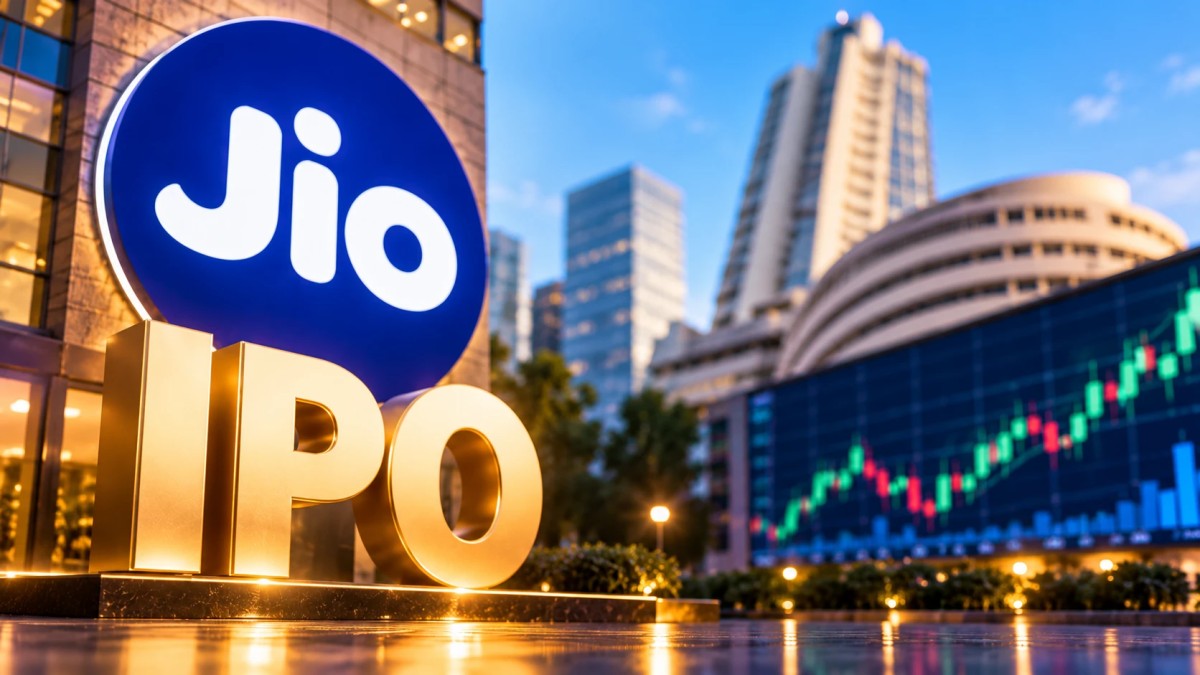
The Jio Platforms IPO, India's largest public offering at ₹30,213 crore, closed on Friday, 23 October 2026, subscribed more than 21 times. Institutional buyers drove the final-day rush, bidding for 67 to 70 times the shares set aside for them, while the issue drew more than 1.37 crore applications, a number market trackers describe as a global record for an IPO.
The exact closing figure depends on which data set you read. Chittorgarh, which combines NSE and BSE bids, put the issue at 21.36 times at 7:28 pm. Cumulative NSE data until 7 pm, reported by Upstox and HDFC Sky, showed 22.19 times. Both point to the same picture: demand that ran far ahead of the shares on offer, led by large institutions, with solid but much smaller interest from retail investors.
This page brings together the final subscription status, the day-by-day build-up, how each investor category bid, what the numbers mean for allotment, and what happens between now and listing on 28 October.
Key points
- Overall subscription: 21.36 times on combined NSE and BSE data at 7:28 pm (Chittorgarh); 22.19 times on NSE data until 7 pm (Upstox, HDFC Sky).
- Qualified institutional buyers: 67.15 times (Chittorgarh) to 70.55 times (NSE data). Retail: 2.72 to 2.76 times.
- Applications: about 1.37 crore by 5:54 pm, passing the previous record of about 97 lakh held by Waaree Energies.
- Day-wise build-up: 3.04 times on day one, 5.40 times on day two, more than 21 times by the close.
- Allotment expected 26 October, refunds and demat credit 27 October, listing on BSE and NSE on 28 October. Registrar: KFin Technologies.
Jio IPO subscription status at a glance
The table below shows the closing figures from both data sets. The first column is Chittorgarh's combined NSE and BSE tracker, the second is NSE's own cumulative data as reported by Upstox and HDFC Sky.
| Investor category | Times subscribed (NSE + BSE, 7:28 pm) | Times subscribed (NSE, 7 pm) |
|---|---|---|
| Qualified institutional buyers (excluding anchors) | 67.15 | 70.55 |
| Non-institutional investors (total) | 13.99 | 14.00 |
| Non-institutional, bids above ₹10 lakh | 15.88 | 15.89 |
| Non-institutional, bids ₹2 lakh to ₹10 lakh | 10.20 | 10.22 |
| Retail individual investors | 2.76 | 2.72 |
| Employees | 2.91 | 2.93 |
| Reliance shareholders' quota | 7.59 | 7.60 |
| Overall | 21.36 | 22.19 |
Sources: Chittorgarh (combined NSE and BSE); Upstox and HDFC Sky (NSE data until 7 pm). IPO Premium's tracker showed a near-identical combined figure of 21.33 times, with institutions at 67.15 times.
Behind those multiples, the issue received bids for about 438 crore shares against about 19.75 crore shares on offer in the public portion, according to the NSE data reported by Upstox. The anchor portion, which was allotted before the issue opened, is not counted in these figures.
How to check the Jio IPO subscription status
Live subscription data for any IPO is published by the stock exchanges during the bidding window, and many sites repackage it.
- NSE. The Jio Platforms issue (symbol JPL) has an issue information page on nseindia.com with a "bid details" section showing shares offered, shares bid for and times subscribed for each category. It shows NSE bids only.
- BSE. BSE's public issue pages show the same data for bids placed through BSE.
- IPO trackers. Sites such as Chittorgarh combine NSE and BSE data and add day-wise and application-wise tables. Brokers such as Upstox, HDFC Sky and Kotak Neo publish regular updates.
- Live blogs. Business sites such as Moneycontrol run live pages with hourly snapshots during bidding.
Now that bidding has closed, the subscription status will not change, except for the clean-up of invalid bids reflected in the basis of allotment.
Why different websites show different Jio IPO numbers
If you searched for the Jio IPO subscription status on Friday evening, you probably saw several different totals: 18.55 times, 20.58 times, 21.36 times and 22.19 times all appeared on well-known sites. None of them is necessarily wrong. They differ for three reasons.
- Time of the snapshot. Bids kept coming in until the close. Moneycontrol's live updates showed 18.17 times at 4:47 pm and 18.55 times at 5:08 pm. Chittorgarh's downloadable summary card, timed at 5:54 pm, showed 20.58 times. Later updates moved higher.
- Which exchange. Investors can bid through either NSE or BSE. Some trackers report NSE's figures alone; others add BSE's. The NSE-only number reported by Upstox and HDFC Sky (22.19 times) and the combined number on Chittorgarh (21.36 times) are measured differently, so they do not match exactly.
- Invalid and duplicate bids. Exchange figures on the last evening are provisional. Bids that fail checks, for example because the money was not blocked in the bank account or the same PAN applied twice in one category, are removed later. The final, cleaned-up figures appear in the basis of allotment, which the registrar publishes when allotment is finalised.
For a reader, the practical takeaway is simple: the issue was subscribed a little over 21 to a little over 22 times, depending on the source, and the retail portion was subscribed a little under 3 times. Small differences in the second decimal place do not change what the numbers mean for allotment.
Day-wise Jio IPO subscription status
Demand built steadily over three days, then jumped on the final afternoon as large institutions placed their bids. This is a common pattern in big Indian IPOs: institutions often wait until the last day to see how the book is shaping up.
| Day | Institutions | Non-institutional | Retail | Employees | Shareholders | Overall |
|---|---|---|---|---|---|---|
| Day 1 (21 Oct) | 9.04 | 1.61 | 0.73 | 1.33 | 1.41 | 3.04 |
| Day 2 (22 Oct) | 12.87 | 5.67 | 1.55 | 2.05 | 3.92 | 5.40 |
| Day 3 (23 Oct) | 67.15 | 13.99 | 2.76 | 2.91 | 7.59 | 21.36 |
Source: Chittorgarh day-wise data (combined NSE and BSE). HDFC Sky reported the same day one figures, including 3.04 times overall and 9.04 times for institutions.
Day 1, Wednesday 21 October. The issue was fully subscribed within about 100 minutes of opening, the fastest among India's mega IPOs, Business Today reported. By the end of the day it stood at 3.04 times, carried almost entirely by institutions at 9.04 times. Retail investors had bid for about three-quarters of their quota.
Day 2, Thursday 22 October. Retail demand crossed the full quota and non-institutional bids picked up sharply, from 1.61 times to 5.67 times. The overall figure rose to 5.40 times by the close, according to Chittorgarh. Earlier in the day, at 3 pm, the issue stood at 4.38 times, according to HDFC Sky and Kotak Neo.
Day 3, Friday 23 October. The final day was decided by institutions. Their portion went from 12.87 times at the start of the day to more than 67 times at the close, while retail and non-institutional demand rose more gently.
How day 3 unfolded, hour by hour
Moneycontrol's live coverage on Friday tracked the book through the afternoon. The institutional portion more than doubled between 2:20 pm and the close.
| Time (23 Oct) | Institutions | Non-institutional | Retail | Employees | Shareholders | Overall |
|---|---|---|---|---|---|---|
| 12:48 pm | 16.20 | 10.25 | 2.11 | 2.55 | 6.00 | n/a |
| 2:20 pm | 26.57 | 12.32 | 2.32 | 2.68 | 6.68 | 10.68 |
| 3:14 pm | 31.68 | 13.36 | 2.45 | n/a | 7.08 | 12.25 |
| 4:47 pm | 54.68 | 13.83 | 2.63 | 2.85 | 7.47 | 18.17 |
| 5:08 pm | 56.15 | 13.87 | 2.65 | 2.87 | 7.50 | 18.55 |
| Close, 7:28 pm | 67.15 | 13.99 | 2.76 | 2.91 | 7.59 | 21.36 |
Sources: Moneycontrol live updates (12:48 pm to 5:08 pm); Chittorgarh (close). "n/a" means the figure was not shown in that update.
Two things stand out. First, non-institutional demand had largely peaked by mid-afternoon, moving only from 13.36 times at 3:14 pm to just under 14 times at the close. Second, almost all of the late jump in the overall number came from institutions, whose bids rose from about 31 times to about 67 times in the last few hours.
Category by category, what the subscription numbers show
The Jio issue was split into several reserved portions. The multiple for each one tells a different story.
Qualified institutional buyers
Mutual funds, insurers, banks, pension funds and foreign portfolio investors bid in this category. After the anchor allotment, 4.90 crore shares were left for them in the public issue, worth about ₹5,484 crore at the top of the price band, according to Chittorgarh.
By the close they had bid for about 329 crore shares, worth roughly ₹3.68 lakh crore, through 3,143 applications, Chittorgarh's data shows. That is 67.15 times the shares available on combined data, or 70.55 times on NSE's figures as reported by Upstox and HDFC Sky.
Institutional shares are allotted in proportion to bids, not by lottery, so a fund that bid for 70 times its eventual allotment will receive only a small fraction of what it asked for.
Non-institutional investors
This category, often called HNI, covers individuals and entities bidding more than ₹2 lakh. It has two parts: one-third for bids between ₹2 lakh and ₹10 lakh (small NII) and two-thirds for bids above ₹10 lakh (big NII).
- Total: 13.99 times, with bids for about 51 crore shares worth about ₹57,036 crore (Chittorgarh).
- Bids above ₹10 lakh: 15.88 times, about ₹43,171 crore bid, from about 5.98 lakh applications.
- Bids of ₹2 lakh to ₹10 lakh: 10.20 times, about ₹13,864 crore bid, from about 3.69 lakh applications.
Upstox and HDFC Sky's NSE figures put the total at 14.00 times, with 15.89 and 10.22 times for the two parts.
Retail individual investors
Retail investors, bidding up to ₹2 lakh, had 8.50 crore shares reserved for them, about 31.5% of the whole issue and worth about ₹9,516 crore at the upper price, according to Chittorgarh. They bid for about 23.5 crore shares, worth about ₹26,287 crore, through more than 1.02 crore applications.
That makes the retail portion 2.76 times subscribed on combined data and 2.72 times on NSE data. By the standards of a ₹30,000 crore issue, that is strong retail participation; by the standards of smaller, hyped IPOs, where retail portions are sometimes subscribed 50 or 100 times, it is moderate. The sheer size of the retail quota is the main reason.
Employee quota
Eligible employees could bid for up to ₹500 crore of shares at a discount of ₹54 per share. The employee portion of 46.95 lakh shares was subscribed 2.91 times on combined data and 2.93 times on NSE data.
Reliance shareholders' quota
Up to ₹2,500 crore, or about 2.23 crore shares, was reserved for eligible individual shareholders of Reliance Industries as of the record date of 14 October 2026. This portion was subscribed 7.59 times (Chittorgarh) or 7.60 times (NSE data), much higher than the general retail portion.
The reason is the structure: a Reliance shareholder could apply in both the shareholder quota and the retail category, which many did. Because the shareholder quota is smaller and the number of eligible applicants is limited to Reliance's own retail shareholders, demand per share was higher.
The applications record
The headline number of this IPO may be the number of people who applied.
At about 1 pm on Friday, with five hours of bidding left, the issue passed 1 crore applications, according to exchange data reported by Moneycontrol. That beat the previous record of about 97 lakh applications received by Waaree Energies in October 2024. Bajaj Housing Finance and Bharat Coking Coal had each drawn about 90 lakh applications, Moneycontrol reported.
By 5:54 pm, total applications stood at 1,37,01,679, according to Chittorgarh's summary. Vartha Bharati reported a final count of more than 1.38 crore over the three days, with about 30.5 lakh on day one and more than 75 lakh by the end of day two.
Most of those applications were retail. Chittorgarh's category data shows about 1.03 crore retail applications against about 9.7 lakh from non-institutional investors and just over 3,000 from institutions. The count reflects how widely Jio is known in Indian households and how far IPO investing has spread through mobile trading apps and UPI-based applications since 2020.
How much money was bid
Subscription multiples measure shares; the rupee value of bids gives a sense of scale.
| Portion | Value of bids (₹ crore) |
|---|---|
| Qualified institutional buyers | 3,68,263.61 |
| Non-institutional investors | 57,035.88 |
| Retail investors | 26,286.54 |
Source: Chittorgarh, at the upper price band of ₹1,119, at 7:28 pm.
Those three categories alone add up to more than ₹4.5 lakh crore of bids for a public portion worth a little over ₹22,000 crore. Including employees and shareholders, non-anchor bids came to about ₹4.90 lakh crore, Vartha Bharati reported. Counting the roughly ₹2.5 lakh crore of demand seen in the anchor book, it put total demand at about ₹7.40 lakh crore.
These are bid values, not money raised. The company raises only the issue size of about ₹30,213 crore. For investors who applied through ASBA or UPI, the money was only blocked in their bank accounts and is released for any shares not allotted.
The anchor book
Before the public issue opened, Jio Platforms allotted 7,24,74,066 shares at ₹1,119 each, worth ₹8,109.85 crore, to anchor investors on Monday, 19 October, according to Chittorgarh. Moneycontrol reported that the shares went to 212 anchor investors, after institutional demand in the anchor book reached about ₹2.5 lakh crore, more than 30 times the amount available.
The anchor allotment made up about 59.7% of the institutional portion. Life Insurance Corporation of India was the largest single anchor, at about ₹500 crore, Chittorgarh's list shows. Big global investors, including BlackRock, Fidelity, Capital Group and JPMorgan, took part alongside Indian mutual funds, Business Today reported earlier in the week.
Half of the anchor shares are locked in for 30 days after allotment and the other half for 90 days, Chittorgarh's data shows, so anchors cannot sell immediately on listing.
How the issue was divided
| Category | Shares offered | Value at ₹1,119 (₹ crore) | Share of issue |
|---|---|---|---|
| Anchor investors | 7,24,74,066 | 8,109.85 | 26.84% |
| Institutions (public portion) | 4,90,07,828 | 5,483.98 | 18.15% |
| Non-institutional investors | 3,64,44,568 | 4,078.15 | 13.50% |
| Retail investors | 8,50,37,326 | 9,515.68 | 31.50% |
| Employees | 46,94,836 | 525.35 | 1.74% |
| Reliance shareholders | 2,23,41,376 | about 2,500 | 8.27% |
| Total | 27,00,00,000 | 30,213.00 | 100% |
Source: Chittorgarh. The employee portion is valued at the upper price here; employees pay ₹54 less per share.
The issue is entirely a fresh issue of shares, with no sale by existing shareholders. Up to ₹27,500 crore will go to repay borrowings of Reliance Jio Infocomm, with the rest for general corporate purposes, according to the offer details reported by Moneycontrol and Business Today.
How Jio's demand compares with other big Indian IPOs
Jio's issue is the largest in India's history, ahead of Hyundai Motor India's ₹27,870 crore offering in October 2024 and LIC's issue of about ₹21,000 crore in 2022.
On subscription, Jio is far ahead of both. Hyundai's IPO was subscribed about 2.4 times and LIC's nearly three times. Jio's 21 to 22 times is unusual for an issue of this size, because the bigger the issue, the more money is needed to cover it many times over.
On applications, Jio's count of more than 1.37 crore is well clear of the earlier highs of about 97 lakh for Waaree Energies and about 90 lakh each for Bajaj Housing Finance and Bharat Coking Coal.
| IPO | Year | Issue size | Subscription | Applications |
|---|---|---|---|---|
| Jio Platforms | 2026 | ₹30,213 crore | 21 to 22 times | about 1.37 to 1.38 crore |
| Hyundai Motor India | 2024 | ₹27,870 crore | about 2.4 times | n/a |
| LIC | 2022 | about ₹21,000 crore | nearly 3 times | n/a |
| Waaree Energies | 2024 | n/a | n/a | about 97 lakh |
| Bajaj Housing Finance | 2024 | n/a | n/a | about 90 lakh |
Sources: Chittorgarh, Upstox, HDFC Sky, Moneycontrol, Vartha Bharati, Outlook Business. "n/a" marks figures not compared here.
Jio IPO subscription status application wise, and what it means for allotment
The subscription multiple decides how likely an applicant is to get shares, and the rules differ by category.
Retail investors. SEBI's rules require that, where possible, every valid retail application gets at least one minimum lot of 12 shares. When there are more applications than lots, a computerised lottery decides who gets one. So the number that matters for retail investors is not the share-based multiple of 2.76 times, but the number of applications against the number of lots.
Chittorgarh's application-wise estimate shows about 70.86 lakh minimum lots available for retail investors and about 1.03 crore applications, which works out to about 1.45 times by application. On that estimate, roughly two in three valid retail applications could receive one lot of 12 shares. Chittorgarh notes that the application-wise figures are approximate, and the final ratio will only be known when the basis of allotment is published, after invalid bids are removed.
Small non-institutional investors (₹2 lakh to ₹10 lakh). These also get allotment by lottery for a minimum application size. Chittorgarh's estimate puts this portion at about 5.47 times by application, so roughly one in five or six valid applicants may be allotted the minimum.
Big non-institutional investors (above ₹10 lakh). Estimated at about 4.43 times by application, also on a lottery basis for the minimum size.
Institutions. Allotment is proportionate. A fund will receive roughly one share for every 67 to 70 it bid for.
Shareholders and employees. These portions are allotted under their own rules set out in the offer document. Reliance shareholders who applied in both the shareholder and retail categories are treated as separate applications in each.
At the upper price band of ₹1,119, a minimum lot of 12 shares costs ₹13,428. The ₹2 lakh retail limit works out to a maximum of 14 lots, or 168 shares, at that price.
Key dates after the Jio IPO closed
| Event | Date |
|---|---|
| Bidding closed | Friday, 23 October 2026 |
| Basis of allotment | Monday, 26 October 2026 (expected) |
| Refunds for unallotted applicants | Tuesday, 27 October 2026 (expected) |
| Shares credited to demat accounts | Tuesday, 27 October 2026 (expected) |
| Listing on BSE and NSE | Wednesday, 28 October 2026 |
Sources: Kotak Neo, Upstox, HDFC Sky, Vartha Bharati.
How to check the Jio IPO allotment status
The registrar for the issue is KFin Technologies, according to Kotak Neo. Once allotment is finalised on 26 October, you can check in any of these places.
- KFin Technologies. Go to the KFin IPO status page, select Jio Platforms (JPL) from the list, and search using your PAN, application number or demat account number.
- BSE. On BSE's application status page, choose Equity as the issue type, select the Jio issue, enter your application number or PAN, and submit.
- NSE. On NSE's IPO bid details page, choose the equity IPO option, select JPL, and enter your PAN and application number.
- Your broker or bank. Most trading apps show the allotment status in their IPO section once the registrar shares the data.
If the status shows zero shares, the money blocked in your bank account will be released. If the site says no record is found on 26 October, the data may not be live yet; try again later in the day.
What analysts and rating agencies said
Rating agencies looked beyond the subscription numbers at what the listing means for Reliance.
- Transparency. The listing will improve transparency and give a clearer market valuation for Reliance's digital business, Moody's Ratings said, Moneycontrol reported. Moody's also said the listing would diversify Jio's funding sources and broaden its access to domestic and international capital.
- Size within Reliance. Jio contributed 37% of Reliance Industries' consolidated operating profit (EBITDA) in the year ended March 2026, according to Moody's.
- Reliance's stake. Reliance is expected to keep a stake of about 64.5% in Jio after the IPO, preserving control, according to CreditSights. Existing minority investors, including Meta and Google, will see their holdings diluted by the new shares.
- Debt. CreditSights highlighted Jio's total debt of about ₹70,800 crore and about ₹1.1 lakh crore of deferred spectrum payments, which is why using most of the proceeds to repay debt matters. It estimated the IPO could improve Reliance's pro forma net leverage by about 0.2 percentage points from 2.1 times.
- Credit impact. Moody's said the key credit benefit for Reliance was added funding flexibility rather than a large change in leverage or liquidity over the next 12 months.
Akash Ambani, managing director of Jio Platforms, led the company's pitch to investors. For more on his role and what it means for Reliance's succession, read our report Akash Ambani fronts Jio IPO as Reliance succession moves on. For the full offer details, see Jio Platforms IPO dates, price band and what we know.
What the subscription numbers do not tell you
Heavy subscription is a sign of demand at the IPO price. It is not a forecast of where the shares will trade.
- Listing price. The opening price on 28 October will depend on market conditions that day, on how much of the demand was from investors who plan to hold and how much from those who plan to sell quickly, and on how institutional investors who received only a fraction of their bids behave in the market.
- Inflated bids. In oversubscribed issues, some investors bid for more than they want, expecting to receive only a fraction. That makes the multiple look higher than the real long-term demand.
- Company fundamentals. Jio Platforms reported revenue of ₹1,46,885 crore and a net profit of ₹30,049 crore for the year to March 2026, with telecom making up most of both. The red herring prospectus filed with SEBI sets out the risks, including debt, competition, regulation and spectrum costs.
National Diaries does not give investment advice. This report is for information only. Speak to a SEBI-registered adviser before making investment decisions.
The Jio IPO has set a new benchmark for how many Indians take part in a public offering. The next test comes on 28 October, when the shares start trading.
This article is for information only and is not investment advice.
Frequently asked questions
What's Your Reaction?
 Like
0
 Dislike
0
 Love
0
 Funny
0
 Wow
0
 Sad
0
 Angry
0






Comments (0)