


 Indians in Europe
Indian embassy in France asks nationals to stay vigilant
The Indian embassy in Paris has asked Indians in France to avoid protests and follow local curfews. Helpline numbers, what the curfews cover and what to do.

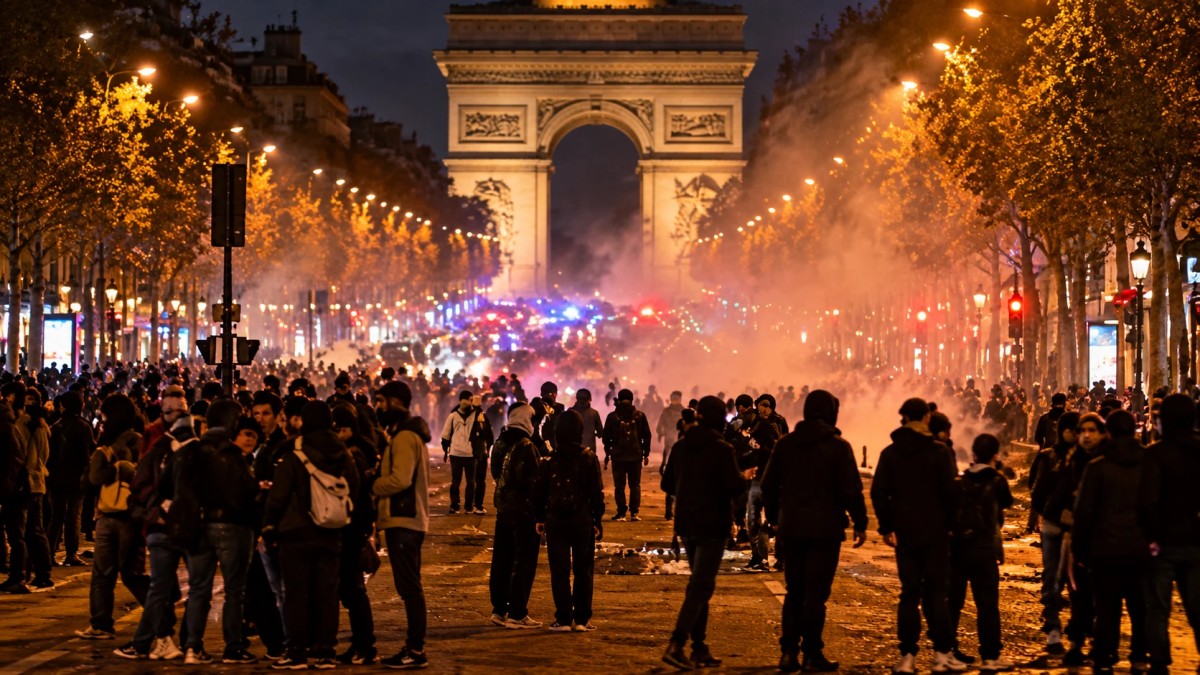
The Embassy of India in Paris has asked Indian nationals in France, and anyone planning to travel there, to stay alert and keep away from protests after weeks of unrest turned violent and several French cities imposed night curfews.
"In view of the recent developments and localised curfews imposed in France, please remain vigilant and exercise due caution," the embassy said in an advisory posted on X on Wednesday evening, 21 October, India News Network, Oneindia and Siasat reported. It asked Indians to avoid large gatherings and crowded places where protests are taking place, and to follow the instructions issued by French authorities.
Key points
- The Embassy of India in Paris issued the advisory on the evening of 21 October, citing recent developments and localised curfews in France.
- Indians are asked to avoid protests and crowds, follow French authorities' instructions and keep track of transport disruptions.
- Travellers should stay in direct contact with their airlines or travel agents for schedule changes.
- Emergency numbers: Paris embassy +33 6 48 34 00 63; Marseille consulate +33 7 43 16 25 59.
- The advisory comes two days after a similar one from the Indian embassy in Italy.
The advisory, in the embassy's words
Here is the embassy's post on X:
Advisory for Indian Nationals in France and Those Travelling to France. In view of the recent developments and localised curfews imposed in France, please remain vigilant and exercise due caution. View the post by India in France (@IndiaembFrance), 21 October 2026
The advisory, titled "Advisory for Indian Nationals in France and Those Travelling to France", sets out four main requests, according to the embassy's post and reports by Siasat and Oneindia:
- Stay away from protests: Avoid large gatherings and crowded places where demonstrations are taking place.
- Follow local rules: Follow the instructions and advisories issued by the local French authorities, including curfews.
- Stay informed: Follow local news, official French government updates and notices about public transport disruptions.
- Check travel plans: Stay in direct contact with airlines or travel agencies for real-time schedule changes, as road and public transport may face delays or cuts.
Embassy and consulate helplines
The embassy listed two emergency contacts, Siasat and Oneindia reported:
| Mission | Phone | |
|---|---|---|
| Embassy of India, Paris | +33 6 48 34 00 63 | [email protected] |
| Consulate General of India, Marseille | +33 7 43 16 25 59 | [email protected] |
Save both numbers on your phone now, not when you need them. If you are outside Paris, especially in the south of France, the Marseille consulate may be the closer office.
Why the embassy issued the advisory
France is going through its worst unrest in years. What began in September as a student movement over teacher shortages and run-down schools grew in October into nationwide protests against rising living costs and a €54 billion austerity budget. We explained the background in Why France is protesting, from schools to a budget revolt.
On Saturday, 17 October, protests in several cities turned into rioting and looting. The historic town hall in Limoges was set on fire, and Justice Minister Gérald Darmanin said counter-terrorism authorities were involved in the investigation, ABC News reported. Clashes continued on Sunday evening in Paris, Lyon and Marseille, Euronews reported.
Interior Minister Laurent Nuñez admitted that police "lost control" in some cities, and offered to resign. President Emmanuel Macron refused to accept his resignation, and asked him to ensure transparency over failures in planning and intelligence, Al Jazeera and Euronews reported. Almost 1,000 police officers and gendarmes were injured, Al Jazeera reported. Prime Minister Sébastien Lecornu said that despite "extreme violence" no one was killed on Saturday, Euronews reported.
Arrests so far
The arrest figures have risen through the week:
| Date | Figure | Source |
|---|---|---|
| 18 to 19 October | About 2,330 to 2,400 people taken into custody over the weekend | Darmanin and authorities, via Al Jazeera and Euronews |
| 20 October | 2,513 people taken into custody, 67 imprisoned | Nuñez, via ABC News |
| 21 October | About 2,500 detained, 174 jailed and 917 formally prosecuted | Darmanin, via Oneindia and India News Network |
Where the curfews are
On 19 October, Lecornu asked France's regional prefects to impose "partial" and "localised" curfews where needed, mainly to protect people and shops. He ruled out a curfew for the whole of Paris, saying it was "out of the question", Al Jazeera reported. The first curfews took effect that night:
- Paris: A curfew from 11pm to 6am around Place de la République and streets near Les Halles, according to Paris police, with gatherings and demonstrations banned across the city from 8pm, Al Jazeera and Euronews reported.
- Lille and nearby towns: Curfews on Monday and Tuesday nights from 8pm to 6am, Euronews and Al Jazeera reported.
- Nice: A curfew for minors from 9pm to 6am on streets in the city centre, announced by Mayor Eric Ciotti, Euronews reported.
- Lyon and Coulaines: Night curfews on Monday, some applying only to minors, Al Jazeera reported.
Curfews are set locally and can change from one night to the next. Some apply to everyone; others apply only to people under 18. Lecornu wrote on X that "targeted curfews have contributed to the calm of this night", ABC News reported, and the past two nights have been calmer, Oneindia and India News Network reported. Curfews remain in force in parts of several major cities.
What comes next
More protests are planned this week, which is why the advisory matters now:
- Thursday, 22 October: Paris police said a protest planned in the capital would not be allowed, citing public safety, Oneindia and India News Network reported.
- Saturday, 24 October: Student union UNEF has called for nationwide protests, and the CGT trade union said it would join and called for peaceful marches, according to reports. Groups linked to the Yellow Vests movement also back the protests.
- Security: Lecornu met union leaders on Wednesday and said the police deployment for Saturday would be "massive". Nuñez said soldiers from Operation Sentinelle, the army's domestic security mission, would help prevent violence, Siasat and CNBC reported.
Macron, speaking in Qatar on Wednesday, said the government would use all available legal tools to stop such violence from happening again, and said a state of emergency was not needed at this stage, Siasat reported.
The Italy advisory
France is not the only European country where Indian missions have issued warnings this week. On Monday, 19 October, the Embassy of India in Rome asked Indians in Italy to avoid crowded areas and protest sites after cost-of-living demonstrations turned violent in northern cities including Milan, Bologna and Turin, Deccan Chronicle and All India Radio reported. Its emergency numbers are +39 331 614 2085 (Rome) and +39 388 164 7527 (Consulate General, Milan).
What Indians in France should do now
France has a large Indian community, including thousands of students at universities and business schools, IT and engineering professionals, and tourists. Most of the country is functioning normally, but protests can grow quickly and curfews are announced at short notice. Based on the embassy's advice and the situation on the ground, here is a practical checklist.
For students and residents:
- Save the embassy and consulate numbers, and share them with family in India.
- Check your local prefecture's or city hall's announcements each evening for curfews in your area. They are usually posted on official websites and social media.
- Avoid Place de la République, Les Halles and other places where marches usually gather, especially on Saturday, 24 October.
- If you live in a curfew zone, plan to be home before it starts. Carry your residence permit or passport and student card.
- Do not film or photograph clashes or police operations up close.
- If you have lectures or exams, check with your university about changes to timetables or campus access.
For tourists and business travellers:
- Check flight times directly with your airline before leaving for the airport, and allow extra time.
- Check train and metro services before travelling, as strikes and closures can cause cuts at short notice.
- Keep a copy of your passport and visa, and know your hotel's full address.
- Stay near your hotel in the evenings in areas under curfew.
- Ask your travel insurer what your policy covers if plans change because of unrest.
If you need help: Call the embassy in Paris or the consulate in Marseille. For non-emergency consular problems, the Ministry of External Affairs' MADAD portal also takes requests from Indians abroad.
Is it safe to travel to France?
The embassy has not told Indians to avoid travel to France. Its advisory asks for caution, not cancellation. Tourist sites, airports and most of the country remain open. The main risks are being caught near a protest that turns violent, and disruptions to transport. Travellers with flexible plans may want to avoid the weekend of 24 and 25 October, when the next big protests are due, and should keep checking the embassy's X account for updates.
For the many Indians studying, working and travelling in France, the advice is simple: keep the helpline numbers close, stay away from the crowds, and check the rules in your city each night until the unrest settles.
Frequently asked questions
What's Your Reaction?
 Like
0
 Dislike
0
 Love
0
 Funny
0
 Wow
0
 Sad
0
 Angry
0




Comments (0)