


One killed, eight hurt in Dammam King Fahd airport attack
One person was killed and eight injured in an attack on King Fahd International Airport in Dammam, Saudi Arabia. What happened and what it means for Indians.

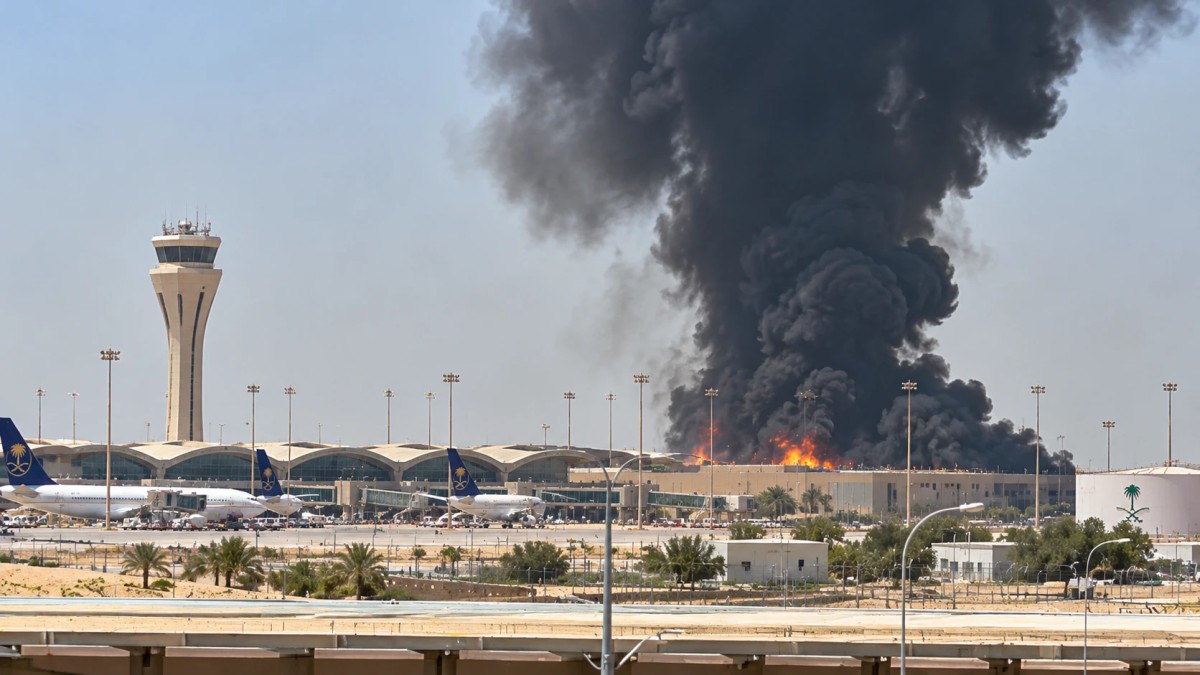
One person was killed and eight were injured in an attack on King Fahd International Airport in Dammam, Saudi Arabia, on the evening of Wednesday, 21 October, the country's General Authority of Civil Aviation (GACA) said.
It was the first deadly attack on the airport in a month of strikes on Saudi airports. On the same day, debris from an intercepted drone killed two people near the Shaybah oil field, and the United States ordered all its embassy staff and their families to leave Saudi Arabia, Gulf News and AFP reported.
Key points
- What: an attack on King Fahd International Airport, Dammam, in Saudi Arabia's Eastern Province, on the evening of 21 October.
- Casualties: one resident killed, eight injured, with injuries from minor to critical, GACA said.
- Damage to the airport is still being assessed; GACA did not say what weapon was used.
- Same day: drone debris killed two people, a Filipino and a Nepali, near the Shaybah oil field.
- The US ordered all embassy staff and families to leave Saudi Arabia, an AFP source said.
- The Houthis have been blamed for a series of strikes on Saudi airports this month; reports differ on whether they claimed this one.
What happened at King Fahd airport
GACA said one resident was killed and eight others were hurt, with injuries ranging from minor to critical. All the injured were taken to hospital. The authority said the airport suffered material damage, but that the full extent was still being assessed, Asharq Al-Awsat and Al Jazeera reported.
GACA did not say what type of weapon hit the airport. The nationalities of the dead and injured have not yet been announced.
King Fahd International Airport is the main airport for Saudi Arabia's Eastern Province, the centre of the country's oil industry, serving Dammam, Khobar and Dhahran. An earlier strike on the airport on 11 October hit the tarmac and caused a fire but no casualties, according to one report.
Who is behind the attacks?
Saudi airports have come under repeated attack this month, as fighting between Yemen's Houthi movement and the Saudi-backed Yemeni government has intensified, Al Jazeera reported.
Reports differ on Wednesday's attack:
- i24 News, citing The Hill, reported that the Houthis claimed responsibility for the strike.
- Gulf News reported that Houthi military spokesman Yahya Saree denied targeting deep inside Saudi territory.
Saudi authorities did not say who launched the attack on the airport, or the drone near Shaybah. The Saudi-led coalition said it intercepted six drones over the Eastern Province and the Medina region, without naming who launched them.
We explained the background in why the Houthis are attacking Saudi airports.
Drone debris kills two near Shaybah
On the same day, falling debris from a drone aimed at the Shaybah oil field, near the border with the UAE, killed two people and injured two others, Saudi Arabia's energy ministry said. The dead were identified as a Filipino and a Nepali national, Gulf News reported. The ministry did not say who launched the drone.
US orders embassy staff to leave
A diplomatic source told AFP that Washington had ordered all US embassy staff and their families to leave Saudi Arabia, and the families of embassy staff to leave the UAE, Jordan, Qatar and Bahrain, Gulf News reported. The source linked the decision to the continuing attacks on the kingdom.
An ordered departure of this kind is one of the strongest security steps an embassy can take short of closing, and other countries often review their own advice when the US takes it.
A month of attacks on Saudi Arabia
Wednesday's strike is part of a wider pattern in October 2026:
- Riyadh: King Khalid International Airport was hit several times and shut on 10 October, before partly reopening on 21 October.
- Dammam: An earlier strike on King Fahd airport on 11 October caused a fire on the tarmac, according to one report, before Wednesday's deadly attack.
- Oil sites: Drones have targeted energy facilities, including the Shaybah oil field and a Saudi Aramco site, where an attack injured an Indian national, India TV reported.
- Interceptions: The Saudi-led coalition says it has shot down many drones over the Eastern Province and other regions.
Each attack has added to the pressure on airlines, oil companies and foreign workers in the kingdom.
Flights in Saudi Arabia
| Airport | Status, as reported |
|---|---|
| King Khalid International, Riyadh | Shut on 10 October after repeated strikes; partly reopened on 21 October, with Saudia and Flynas flying |
| King Fahd International, Dammam | Attacked on 21 October; flight disruption not yet reported |
Lufthansa and Air France have cancelled flights to Saudi Arabia until mid-November, Gulf News reported. We reported earlier on what the Riyadh airport shutdown meant for Indian flyers.
What it means for Indians in Saudi Arabia
Saudi Arabia is home to one of the largest Indian communities abroad, about 27.5 lakh people according to the Ministry of External Affairs' figures for January 2026, and many work in the oil, construction and services sectors of the Eastern Province around Dammam, Khobar and Jubail.
No Indian has been reported among the victims of Wednesday's attack. But the strikes affect Indians in several ways:
- Travel: Flights between India and Saudi Arabia can be delayed or cancelled at short notice. Check with your airline before leaving for the airport.
- Safety: Follow instructions from Saudi authorities and stay away from areas that have been attacked.
- Help: The Embassy of India in Riyadh and the Consulate General of India in Jeddah can help Indian nationals in an emergency. Register with the embassy and keep its contact details handy.
- Families in India: Rely on official updates rather than forwarded messages, which often spread false casualty figures.
Indian seafarers in the region are also at risk. On the same day, a tanker with 21 Indian crew was hit in the Strait of Hormuz; all were safe. Read our report on the Al Dasma tanker.
Why it matters
The attacks on Saudi airports, oil sites and ships in the Gulf show how the conflicts in Yemen and around Iran are spreading across the region. For India, the Gulf supplies most of its oil and gas, and is home to millions of Indians whose earnings send billions of dollars home every year. Instability there hits Indian families, Indian businesses and India's energy security at the same time.
What happens next
Saudi authorities are still assessing the damage at King Fahd airport, and no one has been officially named as responsible. Airlines will decide on flights day by day. We will update this story as more information becomes available, including any change to Indian government travel advice.
For now, the message for Indians in the Eastern Province is simple: stay alert, follow local instructions, keep the embassy number handy, and check flights before you travel.
Frequently asked questions
What's Your Reaction?
 Like
0
 Dislike
0
 Love
0
 Funny
0
 Wow
0
 Sad
0
 Angry
0





Comments (0)