


 China
Breaking
Magnitude 7 earthquake in Tibet kills at least 16 near Nagqu
A magnitude 7.0 earthquake hit a remote part of northern Tibet on 22 October, killing at least 16 people and collapsing at least 339 homes. What we know.

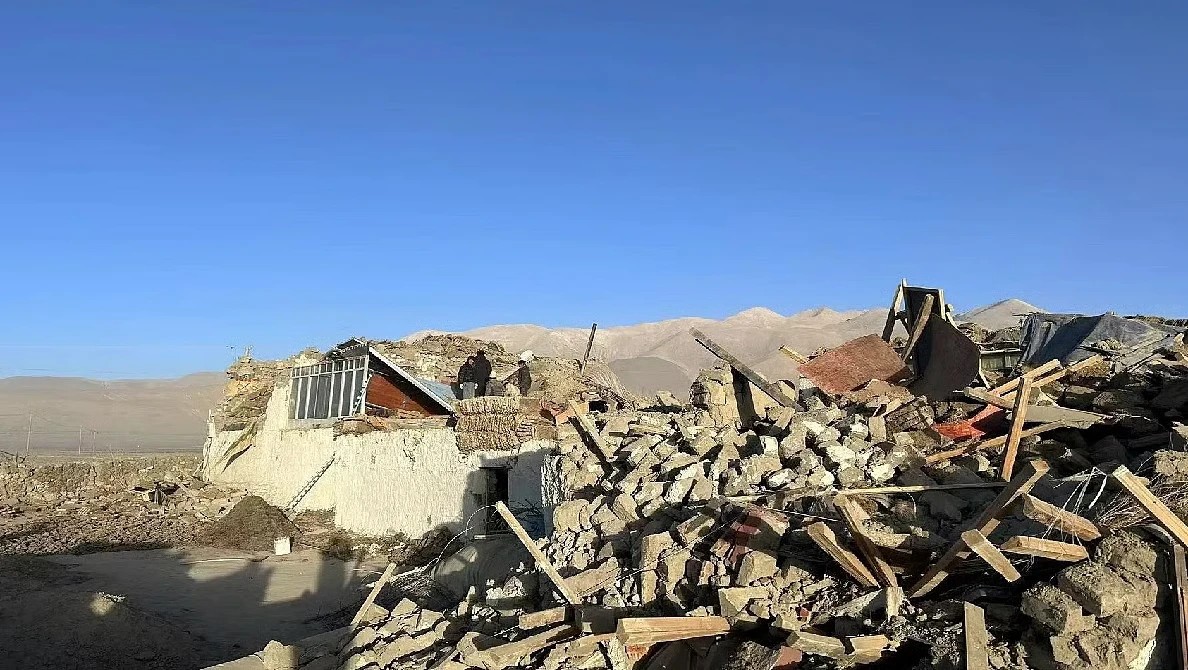
A powerful magnitude 7.0 earthquake struck a remote, high-altitude part of northern Tibet on Thursday night, 22 October, killing at least 16 people and collapsing at least 339 homes, the Associated Press and CNN reported, citing Chinese state media. China's state broadcaster CCTV later put the death toll at 18, with 32 injured, Bloomberg reported.
The quake struck at 10:33 pm local time (8:03 pm IST), with its epicentre about 191 km east-northeast of the city of Nagqu, according to the United States Geological Survey (USGS). CCTV called it the biggest earthquake in the region in the last five years.
Update, 23 Oct 2026, evening (IST): The number of injured has risen to 65, while the death toll stands at 16, the local government said on Friday, TRT World and Khaama Press reported. More than 12,000 people have been moved to safety, Xinhua reported.
Key points
- Magnitude 7.0, at 10:33 pm local time (8:03 pm IST) on 22 October.
- Epicentre about 191 km east-northeast of Nagqu in northern Tibet, USGS said.
- Deaths: 16, the local government said on 23 October; CCTV had earlier put the toll at 18, Bloomberg reported.
- Injured: 65 as of 23 October; more than 12,000 people moved to safety.
- Damage: at least 339 homes and 20 livestock sheds collapsed, the Nagqu media office said.
- More than 1,600 rescuers deployed; trains halted and a section of National Highway 317 closed by rockfalls.
Where the earthquake struck
The epicentre was in a sparsely populated, high-altitude area of northern Tibet, the AP reported. Nagqu, the nearest city named in reports, is more than 300 km north of the regional capital Lhasa.
The USGS measured the depth at 18 km, while the China Earthquake Networks Center, quoted by Xinhua, put it at 10 km, NBC News and the AP reported. Shallow earthquakes of this size tend to cause stronger shaking at the surface than deeper ones.
| Detail | What has been reported |
|---|---|
| Magnitude | 7.0 |
| Time | 10:33 pm local time, 22 October (8:03 pm IST) |
| Epicentre | About 191 km east-northeast of Nagqu (USGS) |
| Depth | 18 km (USGS); 10 km (China Earthquake Networks Center) |
| Deaths | At least 16 (Xinhua, AP); 18 (CCTV, via Bloomberg) |
| Injured | 65 as of 23 October (32 in early reports, then 54) |
| People relocated | More than 12,000 (Xinhua) |
| Homes collapsed | At least 339, plus 20 livestock sheds |
| Aftershocks | At least seven, magnitude 4.3 to 5.2 (USGS, via AP) |
Deaths, injuries and damage
Early reports said 32 people were injured, 11 of them seriously, NBC News reported. A later AP report said 54. On Friday, 23 October, the local government said the number of injured had risen to 65, while the death toll remained 16, TRT World and Khaama Press reported. More than 12,000 people have been relocated to safety, Xinhua reported. Authorities have warned the figures could still change as rescuers reach more remote villages.
At least 339 homes and 20 livestock sheds collapsed, according to the Nagqu media office, citing city officials. Many homes in rural Tibet are built of stone and mud, and herding families depend on livestock through the harsh winter, so the loss of sheds and animals matters as much as the loss of houses.
The rescue effort
China's President Xi Jinping called for "all-out efforts in rescue operations and medical relief work", the AP reported.
According to the AP, citing Chinese state media:
- More than 1,600 people from the local county were sent to the quake zone.
- Supplies included 1,000 prefabricated housing units, about 3,000 tents, folding beds, flashlights and winter clothing.
- Police and fire rescue teams set up tents to shelter people whose homes were damaged, NBC News reported.
- Communication was down in some areas.
- Rail authorities halted trains through the region, and rockfalls closed a section of National Highway 317.
The weather will make the work harder. Intermittent snow is expected in the quake zone over the next three days, Xinhua reported, according to the AP. Night temperatures on the high plateau in late October are already well below freezing, which is why tents, beds and winter clothing are among the first supplies sent.
Aftershocks
The USGS recorded at least seven aftershocks, with magnitudes between 4.3 and 5.2, at depths of about 10 km, the AP reported. More aftershocks are likely in the coming days, and damaged buildings can collapse in them, so people in the area are usually told to stay out of cracked homes.
What a magnitude 7 earthquake means
Earthquake magnitude is measured on a logarithmic scale. Each step up of one whole number means roughly 32 times more energy released. A magnitude 7.0 quake therefore releases about 32 times more energy than a magnitude 6.0, and about 1,000 times more than a magnitude 5.0.
Earthquakes of magnitude 7 and above are classed as major earthquakes. They can cause serious damage over a wide area, especially when they are shallow, as this one was, and when buildings are not designed to resist shaking. In a remote area with few people, as in northern Tibet, the death toll can be lower than a similar quake near a city, but rescue is harder because roads, power and phone lines are fewer and easily cut.
Life on the plateau
Nagqu is one of the highest cities in the world, at around 4,500 metres above sea level. The grasslands around it are home to herding families who raise yaks and sheep and live in scattered villages and seasonal camps. At that height, thin air makes heavy rescue work exhausting, and winter arrives early. That is why Chinese state media listed tents, folding beds and winter clothing among the first supplies sent, and why the forecast snow worries rescuers.
Why Tibet has big earthquakes
The Tibetan plateau sits where the Indian plate pushes north into the Eurasian plate, the same collision that raised the Himalayas. That slow, constant pressure builds up stress in faults across Tibet, Nepal and northern India, and it is released in earthquakes.
Tibet has been hit hard before. In January 2025, an earthquake in Dingri county, near the Nepal border, killed 126 people, according to Chinese officials at the time. The 22 October quake struck much farther north, in a far less populated area, which may be one reason the toll so far is lower.
Why it matters for India
The earthquake struck far from India, in the north of Tibet, and the reports we reviewed did not mention damage in India or Nepal. But it is a reminder of the risk across the whole Himalayan belt:
- The same plate collision that caused this quake affects Jammu and Kashmir, Ladakh, Himachal Pradesh, Uttarakhand, Sikkim and the northeast, which are among India's most earthquake-prone regions.
- India's National Disaster Management Authority advises people in quake-prone areas to keep an emergency kit, know the safest spots at home (under a sturdy table, away from windows) and follow "drop, cover and hold on" during shaking.
- Indian pilgrims and travellers to Tibet, including those on the Kailash Mansarovar route in season, cross the region, though the yatra normally runs in summer and the quake zone is far to the north-east of the pilgrimage area.
What happens next
The first 72 hours after a major earthquake are usually the most important for finding survivors under rubble, which is why more than 1,600 rescuers were sent to the area. Rescue teams will keep searching collapsed homes and moving families into tents and prefabricated shelters before the snow sets in. Officials are expected to update the death and injury figures as more remote villages are reached. We will update this story as new figures come in.
For the families of Nagqu, the coming days will be about shelter and warmth as much as rescue, with snow already on the way.
Frequently asked questions
What's Your Reaction?
 Like
0
 Dislike
0
 Love
0
 Funny
0
 Wow
0
 Sad
0
 Angry
0





Comments (0)