


Moving back to India, your 401(k) and Social Security
Moving back to India from the US? What to do with a 401(k), how withdrawals are taxed in both countries, and when Indian citizens can get US Social Security.

Every year thousands of Indian families leave the US and move home, after a layoff, a visa that ran out or simply a wish to be near parents. Two questions come up almost every time: what happens to the 401(k), and will I ever get US Social Security?
The short answers: you don't have to touch your 401(k) when you leave, and an Indian citizen who earned 40 credits can usually be paid US Social Security in India. The tax details are where people lose money, so here's the full picture as of October 2026.
Key points
- A 401(k) can stay invested in the US after you move. Cashing out before age 59½ usually costs income tax plus a 10% extra tax.
- Rolling it into an IRA keeps it tax-deferred and often easier to manage from India.
- Indian citizens living in India can receive US Social Security if they earned 40 credits (about 10 years of work) or lived in the US for 10 years, says the SSA.
- The SSA withholds 25.5% of benefits for non-US citizens living abroad; the India–US treaty says Social Security is taxed only in the US.
- India has no social security agreement with the US, so years in the two systems can't be added together.
Your 401(k): four choices
1. Leave it where it is. Most plans let former employees keep their balance invested. It keeps growing tax-deferred. The catch: some plans restrict accounts with a foreign address, and you'll be managing it from abroad.
2. Roll it into an IRA. A direct rollover into an Individual Retirement Account moves the money without tax. You get a wider choice of investments and one account instead of several old plans. Some US brokers don't open or keep accounts for people living in India, so check before you leave and update your address honestly.
3. Cash it out. Before age 59½, a withdrawal is taxed as ordinary income in the US, plus a 10% additional tax on early distributions. Plans paying non-residents often withhold 30% unless you claim a treaty rate. On a $100,000 balance, that can mean losing a third or more.
4. Take it gradually after 59½. Withdrawals avoid the 10% extra tax. Under current US law, required minimum distributions start at 73 (rising to 75 for people born in 1960 or later).
Why it matters: Indian professionals make up one of the largest groups in US tech payrolls, and many leave with $50,000 to $500,000 in a 401(k). A rushed cash-out on the way to the airport is one of the costliest mistakes returning families make. For readers in India, this explains why relatives back from the US often keep a US account open for years.
How 401(k) money is taxed after you move
Once you're living in India, both countries may want a share.
In the US. As a non-resident alien, you still owe US tax on 401(k) withdrawals, because the money came from US work. Plans withhold, and you may need to file a US non-resident return (Form 1040-NR).
In India. It depends on your Indian residency:
- Non-resident or RNOR. In your first years back, you may be Resident but Not Ordinarily Resident (RNOR): for example, if you were a non-resident in nine of the previous ten years, or spent 729 days or fewer in India in the previous seven. While RNOR, India generally doesn't tax foreign income that isn't received in India. Our NRI tax explainer explains the tests.
- Resident and ordinarily resident. Once you become fully resident, India taxes worldwide income, including income building up inside a US retirement account. That can mean Indian tax on growth you haven't withdrawn, while the US taxes it only on withdrawal.
India fixed that mismatch in 2021 with Section 89A of the old Act. From 1 April 2026 the relief sits in Section 159 of the Income-tax Act, 2025, claimed on Form 40 (which replaces Form 10-EE). If you opened the account while you were a non-resident in a notified country, which includes the US, you can choose to be taxed in India when you withdraw, not as it grows. The form has to be filed by your return's due date, and the choice can't be reversed.
The treaty. Article 20(1) of the India–US treaty says a private pension or annuity paid to a resident of one country is taxed only in that country. Advisers differ on how far a 401(k) payout counts as a "pension": regular periodic payments fit more easily than a lump sum. Indian tax paid can usually be credited, and vice versa, under Article 25. See our guide to the India US tax treaty.
US Social Security in India
Can you get it?
You need 40 credits to qualify for a US retirement benefit, which is roughly 10 years of work. Earlier credits aren't lost when you leave; they stay on your record.
Being paid abroad is a separate rule. Non-US citizens' benefits usually stop after six months outside the US. But the SSA's own booklet (April 2026 edition) lists India among the countries whose citizens keep getting paid abroad if they:
- earned at least 40 credits, or lived in the US for at least 10 years; or
- are a dependant or survivor of a worker who did, and meet extra residence rules.
US citizens of Indian origin living in India can generally be paid too.
How much tax?
For non-US citizens living abroad, the SSA withholds 30% on 85% of the benefit, a flat 25.5%. Article 20(2) of the India–US treaty says Social Security paid by the US to a resident of India is taxable only in the US, so India shouldn't tax it again. The SSA notes one more exemption: the part of a benefit based on US government employment, paid to someone who is both a citizen and resident of India.
Example. A retiree in Bengaluru, an Indian citizen with 40 credits, has a monthly benefit of $1,600. The SSA withholds $408 (25.5%) and pays $1,192, about ₹1.13 lakh at ₹95 to the dollar. India doesn't tax it under the treaty.
What if you have fewer than 40 credits?
Without 40 credits, there's no US retirement benefit, and the Social Security tax you paid isn't refunded. This is where a totalisation agreement would help: India has signed them with several countries, including the UK (a Double Contribution Convention in force since 15 July 2026), letting short postings skip double contributions. India and the US have no such agreement as of October 2026, despite years of talks.
Before you leave the US: a checklist
- Don't cash out by default. Compare leaving, rolling over and withdrawing, with the tax on each.
- Keep online access to your plan and SSA account (my Social Security) working from abroad.
- Note your credits on your Social Security statement.
- Plan your Indian residency for your first two or three years back, to use RNOR status.
- File Form 40 in India if you become fully resident and want tax on withdrawal, not accrual.
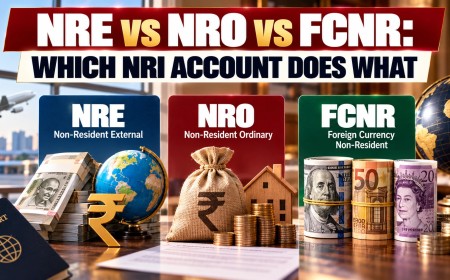
- Move cash through NRO or NRE accounts correctly; see our guide to NRE, NRO and FCNR accounts.
The money you saved in the US doesn't have to be settled the week you leave. The families who come out ahead usually wait, keep records, and decide after their first year back, with their Indian residency status in hand.
Last checked: 26 Oct 2026. This explainer is general information, not tax or investment advice. Consult qualified tax professionals in both countries before moving money.
Frequently asked questions
What's Your Reaction?
 Like
0
 Dislike
0
 Love
0
 Funny
0
 Wow
0
 Sad
0
 Angry
0





Comments (0)