


 US Visas
Explainer
How the H-1B wage-weighted lottery works, explained
The H-1B lottery now favours higher-paid jobs. How the wage-weighted draw works, what the first year showed, and what Indian graduates should know for 2027.

New Delhi (Desk), 18 Oct 2026 (IST) · Explainer
The H-1B lottery, the annual draw that decides which foreign professionals can apply for the main US work visa, is no longer purely random. Since the 2026 season, each applicant's chance depends on the wage level of the job they've been offered: the higher the pay, the more times their name goes into the draw.
The first year under the new system saw far fewer registrations: 211,600, down from 343,981 the year before, according to USCIS figures. For Indian graduates and workers, who receive most H-1B visas, the rules for the next draw, expected in March 2027, matter a great deal.
Key points
- The H-1B cap is 85,000 new visas a year: 65,000 regular, plus 20,000 for holders of US master's or higher degrees.
- Employers register candidates online, usually in March; USCIS then selects registrations for the cap.
- Since the FY 2027 season, selection is weighted: a registration enters the pool one to four times, depending on the wage level offered.
- DHS projected selection odds of roughly 15% for the lowest wage level and about 61% for the highest; these are projections, not published results.
- The cap for FY 2027 has been reached; employers can register again for FY 2028 in spring 2027.
What is the H-1B cap?
The H-1B is a US work visa for "specialty occupations", jobs that normally need at least a bachelor's degree, such as software engineering, data analysis, medicine or finance. It's granted for up to three years at a time, and six years in total, with extensions possible for people in the green card queue.
US law limits new H-1B visas each year to 65,000, plus 20,000 more for people with a US master's degree or higher. That's the "cap". Some employers, such as universities and non-profit research bodies linked to them, are exempt from it.
Because demand has far exceeded 85,000 for years, USCIS uses a selection process, commonly called the lottery, to decide who gets to file.
The two caps are drawn in a set order. All registrations, including those for people with US master's degrees, first go into the draw for the regular 65,000. Advanced-degree holders who aren't picked then get a second chance in the separate draw for the 20,000 master's cap. That order slightly improves the odds for US master's graduates, which is one reason so many Indian students choose a US master's over other routes.
How the H-1B registration works
Each spring, US employers submit an online registration for each worker they want to sponsor, with a fee per registration. USCIS then selects enough registrations to fill the cap. Only selected employers can file a full H-1B petition, and the earliest start date is 1 October, the beginning of the US fiscal year.
Since 2024, selection has been "beneficiary-centric": each person counts once, however many employers register them. That ended a practice where some workers were registered by several related companies to improve their odds.
For FY 2027, registration ran in March 2026, employers had until 30 June to file petitions, and USCIS announced in July that it had enough petitions to meet the cap, with no second round, according to the law firm Fragomen.
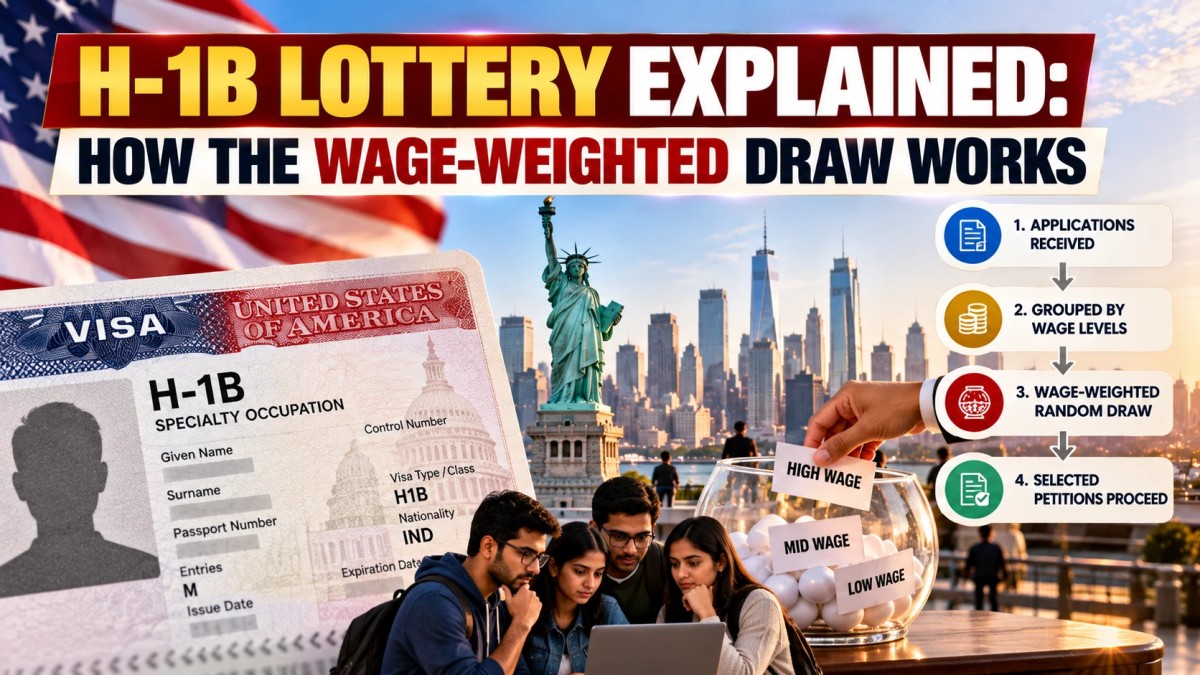
H-1B lottery explained: the new wage-weighted draw
Under the old system, every registration had the same chance. Under the new rule, which took effect in late February 2026, each registration is entered one to four times depending on the wage offered, measured against the US Labor Department's four prevailing-wage levels for that job and location:
| Wage level offered | Entries in the draw | DHS projected selection chance |
|---|---|---|
| Level I (entry) | 1 | about 15% |
| Level II | 2 | about 31% |
| Level III | 3 | about 46% |
| Level IV (most senior) | 4 | about 61% |
Those percentages are DHS's own projections for how the system would work. USCIS hadn't published actual selection rates by wage level at the time of writing, and law firms reported their own clients' results running differently.
What we do know from the first year: among selected beneficiaries, 71.5% held a US advanced degree, up from 57% the year before, and only 17.7% were at the lowest wage level, Fragomen reported.
What it means for Indian applicants
Indians have received the majority of H-1B approvals in recent years, so a change to how the draw works matters more to Indian families than to anyone else.
The new system tilts the odds towards experienced, higher-paid workers and graduates of US master's programmes, who often get higher offers than people hired straight out of a bachelor's degree. It makes the draw harder for entry-level hires, including many young Indian engineers placed by IT services firms at Level I wages.
There are trade-offs. A student who studied in the US, works on OPT and gets a strong offer may now have better odds than before. A worker at the bottom of the pay scale, even with years of experience in India, may have worse odds.
Why it matters: The H-1B is the main route by which Indian professionals start careers in the US, and often the first step towards a green card. For India's tech industry, it shapes how many engineers go onsite and how much work moves offshore instead. For readers in the US, it's part of a wider shift in the administration's approach to skilled immigration this year.
The other changes around the H-1B
The lottery isn't the only rule that's moved:
- The $100,000 fee: a presidential proclamation imposed a $100,000 fee on certain new H-1B petitions in September 2025. Courts have blocked it, with a second judge ruling against it on 1 October 2026, according to TIME.
- Extensions: on 14 October 2026, DHS proposed ending "deference" to earlier approvals when deciding extensions. Comments are open until 13 November.
- OPT: DHS has proposed a $70,000 fee for each student's initial OPT work permit, the usual bridge from a US degree to an H-1B. Comments close on 9 November.
- Green cards: the Labor Department has suspended PERM green card processing for eight large employers, including four Indian IT companies.
What to do before the next draw
This isn't legal advice. For anyone hoping to be registered in spring 2027:
- Know your wage level. Ask your employer which prevailing-wage level your offer falls in. It now affects your odds directly.
- Check cap-exempt options. Universities, affiliated non-profits and some research organisations can hire without the lottery.
- Students: if you're on STEM OPT, you may have up to three tries at the draw.
- Don't pay for "guaranteed" selection. No agent can improve your odds beyond the wage level and degree rules. Registration fraud can lead to denial.
- Read your status in myUSCIS. Employers see "Selected" or "Not Selected" there after the draw, and unselected registrations don't carry over to the next year.
Calling it a lottery always made it sound like luck. From 2026, it's luck with a thumb on the scale, and the thumb is the salary. For Indian candidates, the most useful question for an employer is no longer "will you register me?" but "at what wage level?"
This explainer is general information, not legal advice.
Frequently asked questions
What's Your Reaction?
 Like
0
 Dislike
0
 Love
0
 Funny
0
 Wow
0
 Sad
0
 Angry
0




Comments (0)