


 US Politics
The Indian American candidates to watch in the 2026 midterms
From Vivek Ramaswamy's Ohio race to four House members seeking re-election: the Indian American candidates in the 3 Nov US midterms, and what's at stake.

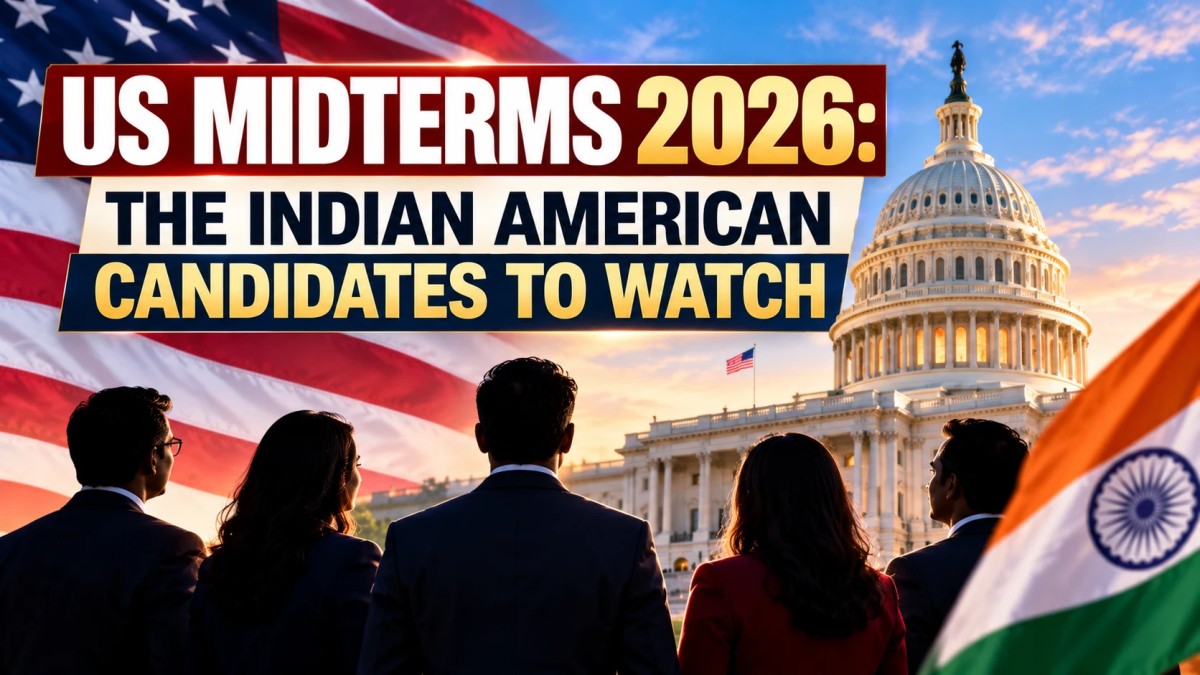
Americans vote on 3 November 2026 in the midterm elections, and more Indian Americans than ever are on the ballot, from governor's races to state legislatures. The most watched is in Ohio, where Republican Vivek Ramaswamy is trying to become Ohio's first Indian American governor, against Democrat Amy Acton.
In Congress, four Indian American members of the House of Representatives are seeking re-election. Two others won't be back after losing their party primaries.
Key points
- The midterms are on Tuesday, 3 November (results from the morning of 4 November IST onwards).
- Ohio governor: Vivek Ramaswamy (Republican) vs Amy Acton (Democrat); recent polls are close, with leads for both sides depending on the pollster.
- House incumbents up for re-election: Ro Khanna, Pramila Jayapal, Ami Bera and Suhas Subramanyam, all Democrats.
- At least nine Indian American Republicans are on the November ballot, according to community media tallies reported by IANS.
- A 2026 survey found 66% of Indian American respondents preferred Democratic Senate candidates and 22% Republican.
What the US midterms are, briefly
Midterms happen halfway through a president's four-year term. All 435 seats in the House of Representatives are up, along with about a third of the Senate, 36 governorships and thousands of state and local offices. The results decide which party controls Congress for the next two years, which shapes everything from immigration law to trade. Turnout is usually lower than in presidential years, which makes motivated groups of voters, including immigrant communities, matter more in close races.
For Indian readers, the timing matters: polls close across the US between about 4:30 AM and 10:30 AM IST on 4 November, and the first big results usually arrive during the Indian morning.
Indian American candidates midterms 2026: the Ohio governor's race
Ramaswamy, a biotech entrepreneur who ran for the Republican presidential nomination in 2024, is the party's nominee for Ohio governor, with Rob McColley as his running mate. US President Donald Trump endorsed him. The seat is open because Republican governor Mike DeWine can't run again.
Born in Cincinnati to parents from Kerala, Ramaswamy founded the drug developer Roivant Sciences in 2014 and briefly co-led the Trump administration's Department of Government Efficiency with Elon Musk before leaving in January 2025 to run for governor. A win would also make him the first Hindu governor of any US state.
His Democratic opponent, Amy Acton, was the state's health director during the early months of the Covid-19 pandemic. If she wins, she'd be the first woman elected governor of Ohio.
Most October polls have shown Acton ahead, by margins that vary by pollster. A Bowling Green State University poll released in mid-October had her ahead by 50% to 44%, IANS reported, and a CNN/SSRS survey released the same day had her ahead by 50% to 42%. A New York Times/Siena poll earlier in the month had Acton at 49% and Ramaswamy at 45% among likely voters. The main exception was a poll by co/efficient, a Republican-aligned firm, conducted on 5 and 6 October, which had Ramaswamy ahead by 45% to 43%. The Cook Political Report and Sabato's Crystal Ball both rated the race a toss-up. Polls are snapshots, not predictions.
The House members seeking re-election
Four Indian American members of the House, all Democrats, are on the ballot again:
| Member | State | First elected |
|---|---|---|
| Ro Khanna | California | 2016 |
| Pramila Jayapal | Washington | 2016 |
| Ami Bera | California | 2012 |
| Suhas Subramanyam | Virginia | 2024 |
The outgoing House had six members of Indian origin. Business Standard reported the number is likely to fall to four because Raja Krishnamoorthi of Illinois and Shri Thanedar of Michigan didn't get through their primaries. In Michigan's 13th district, Thanedar lost the 4 August Democratic primary to state Representative Donavan McKinney, backed by Senator Bernie Sanders, by 51.9% to 48.1%, IANS reported.
New names are also running for House seats. Democrats have nominated emergency physician Amish Shah in Arizona's first district and Pia Dandiya in Florida's 22nd, while Republicans have three Indian American House nominees, according to the IANS tally.
Other races to watch
Beyond Congress, Indian Americans are running at several levels:
- New York attorney general: Republican Saritha Komatireddy.
- Los Angeles mayor: City Councilmember Nithya Raman is challenging Mayor Karen Bass. A Berkeley IGS poll for the Los Angeles Times, conducted 15 to 20 September, had Raman at 39% and Bass at 28%.
- Texas House District 47 (Austin): immigration lawyer Pooja Sethi won the Democratic primary with about 76% of the vote. If she wins, she'd be the first Indian American in the Texas Legislature.
- State legislatures: Republican Indian American candidates are running in New York, Tennessee, California and Michigan, among others.
The issues that touch Indian families
Immigration sits at the top of the list for many Indian American households, and this year it's unusually live. Since September, the Labor Department has frozen green card processing at eight large employers, including four Indian IT companies; DHS has proposed a $70,000 fee on student work permits and an end to "deference" in H-1B extensions; and courts have blocked a $100,000 H-1B fee. Whoever controls Congress after November will decide whether any of that is written into law, reversed, or left to the courts.
The green card backlog is the issue underneath it all. US law caps employment-based green cards for any one country at 7% of the annual total, and Indian demand far exceeds that share. Changing the cap needs an act of Congress, and bills to do so have stalled for years under both parties.
Relations with India are a quieter factor. Members of Congress don't set foreign policy, but they shape it through hearings, statements and trade votes. Earlier this month, Representative Jayapal's criticism of the voter-roll revision in India drew a sharp response from India's ambassador in Washington, a reminder that Indian American lawmakers are watched closely in New Delhi too.
How Indian Americans are expected to vote
A 2026 survey by AAPI Data and APIA Vote found that 66% of Asian Indian respondents preferred the Democratic candidate in their state's Senate race, against 22% for the Republican. The authors note these are stated preferences, not forecasts.
Both parties' Indian American candidates face particular pressures this year, IANS reported. Republicans are campaigning while their party takes a harder line on skilled immigration, including the H-1B fee and the green card freeze at eight large employers. Several Democrats have lost primaries to challengers on their party's left, in races where positions on Israel and Gaza featured.
Why it matters: Indian Americans are about 1.5% of the US population but one of its highest-earning and most politically active immigrant groups. For India, the make-up of Congress affects trade talks, defence ties and, above all, the visa rules that shape the lives of millions of Indian families. For readers in the US, these races are a test of whether ethnicity still counts for much when ideology divides both parties.
Twenty years ago, an Indian American name on a ballot was news in itself. Now there are enough of them, in both parties, that voters judge them the way they judge everyone else: on positions, not surnames. That might be the clearest sign of how far the community has come.
Frequently asked questions
What's Your Reaction?
 Like
0
 Dislike
0
 Love
0
 Funny
0
 Wow
0
 Sad
0
 Angry
0





Comments (0)